The Man Who Disobeyed Tokyo — Yoshida's 18 Hours to Save a Nation
The Man Who Disobeyed Tokyo
Fukushima Daiichi Crisis — Masao Yoshida
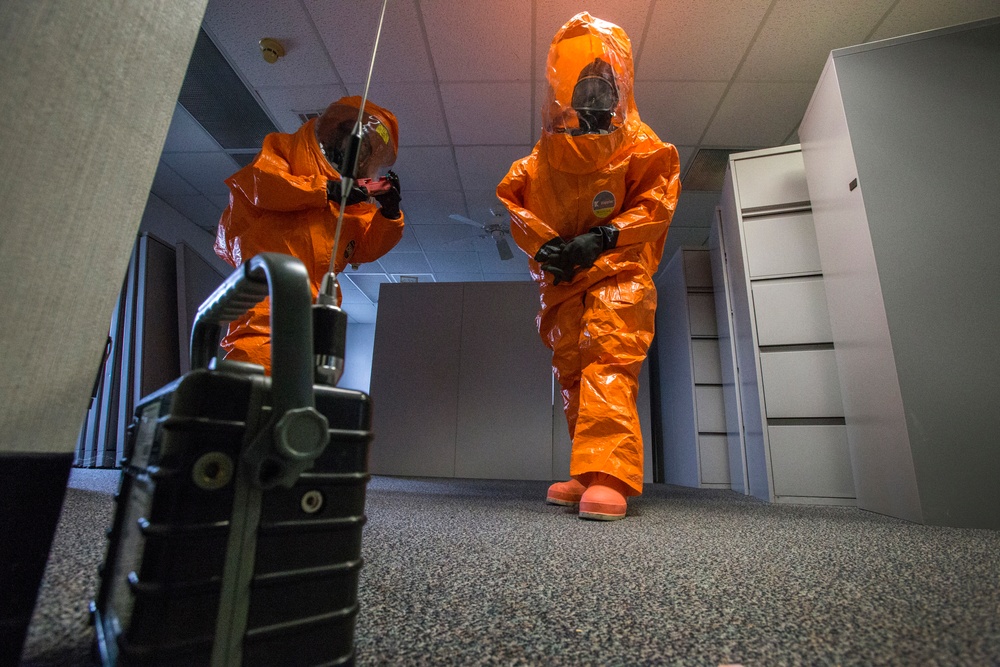
Confronting CBRN Situations
Scenarios are set based on actual historical CBRN events. Time pressure, spatial constraints, and resource limitations are presented in concrete detail.
Character Analysis
Historically recognized figures or individuals in universally identifiable roles. This lowers the entry barrier into the unfamiliar domain of CBRN.
IPB: Contextual Integration
Applying the military IPB (Intelligence Preparation of the Battlefield) four-step process to the given context. Reinterpreting the surrounding environment through a CBRN response lens.
CBRN Resolution Intelligence
The killer content segment. Unconventional resource repurposing that defies common sense, creating reversal and imprint effects. Delivering the "This for that?!" aha moment.
Decision-Making
Situation analysis → Alternative evaluation → Judgment → Execution. A clearly structured decision-making matrix is presented visually.
Situation Resolution
The character's decision execution process and quantitative outcomes. Connecting psychological frameworks and extracting lessons learned.
CBRN Tactical Prompt Engineering
Reverse-engineering the character's decision-making process to extract open-source tactical prompts. Includes a CTA for customized prompt services.
The Man Who Disobeyed Tokyo: Full Narrative
Estimated review time: ~12 minutes | 2,800+ words
STEP 1: Confronting CBRN Situations
The earthquake arrived at 14:46 on March 11, 2011—a 9.0 magnitude catastrophe that would become the costliest natural disaster in human history. At the Fukushima Daiichi Nuclear Power Station, 240 kilometers northeast of Tokyo, Masao Yoshida felt the ground buckle beneath the complex. He had been plant director for nine months. The reactors sensed the tremor first: Units 1, 2, and 3 performed their automatic shutdown sequence (SCRAM), control rods plunging into the cores to halt the nuclear chain reaction. For a moment, the immediate danger seemed contained by design.
Yoshida knew better. The real danger was what came next—the tsunami. Japanese coastal seismic events typically trigger tsunamis within 10-15 minutes. Fukushima Daiichi sat on the Pacific coast, protected by a 10-meter seawall designed to withstand historical wave heights. But ocean physics at a 9.0 magnitude operates in scales beyond historical precedent. At 15:37, the first waves arrived. They were 13-14 meters tall. The seawall, the product of decades of engineering confidence, was overtopped by three to four meters of water that scoured everything in its path.
The tsunami destroyed the backup diesel generators. It flooded the electrical substations. It disabled the fuel oil cooling system. Within minutes, Fukushima Daiichi lost all external power sources and all backup systems designed to cool the reactor cores in emergencies. This was a station blackout—the nightmare scenario every nuclear engineer dreads. The cores would continue to generate decay heat (residual thermal energy from radioactive decay in the fuel) even though the chain reaction had stopped. Without active cooling, that heat would climb. Within hours, fuel temperatures would exceed design limits. Within a day, the fuel could melt.
At 16:30, Yoshida declared a nuclear emergency. He sat in the control room watching temperature gauges climb and radiation alarms begin to spike. The plant's communication systems were partially operational. TEPCO headquarters in Tokyo, 220 kilometers away, could hear his voice on an open teleconference line. They could monitor some data remotely. But they could not see the control room. They could not see the pumps. They could not see Yoshida's face. They only had his voice and the data streams.
What they did not know was that Yoshida was already making decisions that would defy everything Tokyo expected from a subordinate. The 18-hour window between 16:30 on March 11 and roughly 10:30 on March 12 was the golden time—the period when individual judgment could still redirect the trajectory of catastrophe. Everything after that window would be reaction, damage control, and cascading consequences that no leader could fully anticipate or contain.
---
STEP 2: Character Analysis
Masao Yoshida was born in 1955 in Osaka, Japan. He came of age in the 1970s during Japan's economic ascendancy, when nuclear power was seen as the engineering solution that would free the nation from energy dependence on foreign oil. He studied nuclear engineering at Tokyo Institute of Technology, earning his master's degree in 1979 when he was just 24 years old. His classmates would have assumed he would follow the prestigious bureaucratic track—the Ministry of International Trade and Industry (MITI) was actively recruiting top talent from the best schools. Yoshida turned it down. He wanted to work at actual nuclear plants, not in policy offices in Tokyo. This decision revealed a fundamental character trait: he valued direct responsibility over institutional prestige.
Growing up as an only child in Osaka, Yoshida trained in kendo—Japanese swordsmanship—during middle and high school. Kendo practitioners learn discipline through repetitive form, but they also learn an essential psychological principle: when you must make a split-second decision in combat, you cannot hesitate by analyzing options. Your training must move your body before your conscious mind has finished reasoning. Decisions in crisis have a similar structure. There is a window of decision-making time, and once that window closes, the universe makes its own choices regardless of human preference.
For 30+ years, Yoshida lived his career mostly at nuclear plant sites rather than corporate headquarters. He became the kind of engineer respected by frontline workers—someone who understood the machinery not through PowerPoint presentations but through years of hands-on operational knowledge. In June 2010, just nine months before the earthquake, he was appointed plant director of Fukushima Daiichi. In the context of Japanese corporate culture, nine months is barely enough time to establish yourself in a role. He knew the plant's systems intimately (from prior postings), but he was still relatively new to the ultimate decision-making authority.
His colleagues and subordinates described him as "a stubborn individual not afraid to ruffle feathers." In the corporate culture of TEPCO—a massive utility company with 37,000 employees and deep ties to government—this was a notable characteristic. Stubborn people in large organizations often conflict with hierarchical expectations. Yet stubborn people in crises often become essential. They are less likely to default to consensus when consensus is wrong.
Yoshida was 55 years old on March 11, 2011. He was married, he had a career that had been professionally successful. In two years, he could retire with security. On that day, as the earthquake hit and the tsunami warnings came, he faced a decision architecture that would almost certainly harm him personally. Continuing to inject seawater into a reactor core destroys the reactor permanently. It makes the equipment unrecoverable. From TEPCO's perspective, it was an economic catastrophe. From Yoshida's perspective at 16:30 on March 11, it was the only option that prevented a much larger catastrophe. What he could not yet know was that this decision would, nine months later, result in a cancer diagnosis, and that he would be dead within two years of making it. The choice in the golden time would be the choice that killed him.
---
STEP 3: IPB: Contextual Integration
Intelligence Preparation of the Battlefield (IPB) is a military intelligence framework that maps the operational environment—terrain, weather, enemy disposition, civilian population. In civilian crisis management, IPB is the comprehensive situational analysis that frames decision-making. It answers: What is the landscape in which this decision must be made?
PHYSICAL TERRAIN: Fukushima Daiichi occupies a coastal site with six reactors arranged in clusters. Unit 1 sits closest to the ocean; Units 4, 5, and 6 sit farther inland. The seawall was engineered to specific historical parameters: the largest tsunami in Japanese records was the 1896 Sanriku tsunami at approximately 38 meters, but that occurred in a different coastal geography. For Fukushima Daiichi, the design standard was based on the 1960 Chilean tsunami that reached about 5.7 meters at that coast. Seawalls protecting the site were built to 10 meters—a 3x safety margin over the recorded history available to the engineers who designed it. This represented state-of-the-art thinking in 2000 and 2001 when the seawall was constructed. But seawalls do not protect against events beyond historical precedent. The 9.0 earthquake on March 11 had occurred fewer than 12 times in recorded history. The tsunami it generated was outside the boundary of what the seawall was engineered to withstand.
ENVIRONMENTAL FACTORS: At 14:46, the site had power. Cooling systems were operating. Reactors were at full thermal capacity (~460 MW thermal per unit for Units 1-3). At 14:47, the automatic shutdown began. At 14:52, external power from the grid was lost due to transmission line damage. At 15:35-15:45, the tsunami arrived. The diesel generators that should have kicked in to power emergency cooling systems were destroyed by saltwater flooding. There were no secondary generators. There were no tertiary backup systems. The site was, for the first time in its operational history, facing complete loss of all active heat removal capability.
The information terrain was fragmented and asymmetrical. Yoshida in the control room could observe the reactor vessels directly via instrumentation. He could see gauge readings, temperature trends, and radiation levels in real time. TEPCO headquarters in Tokyo had remote data feeds, but those feeds were incomplete and time-delayed. Government officials (including Prime Minister Naoto Kan) had even less direct information and were receiving their awareness through TEPCO intermediaries. This created a critical insight: the person closest to the physical situation (Yoshida) had the best real-time information, while the person with official authority (PM Kan) had the least. Crisis command structures typically assume that authority and information align. Fukushima Daiichi was a situation where they were radically misaligned.
COMMUNICATION AS TERRAIN: The teleconference connecting Yoshida to TEPCO headquarters was an audio-only system. There were no video feeds. Tokyo could hear Yoshida's voice. They could receive data readouts. But they could not see the control room. They could not see the technicians. They could not see the pump equipment. They could not verify that orders were being executed or disobeyed. This technological limitation became, in the hands of someone like Yoshida, a form of tactical advantage.
NUCLEAR PHYSICS AS WEATHER: Decay heat follows a predictable logarithmic curve. For a reactor at full power suddenly shut down, the residual heat generation from radioactive decay follows a specific thermal trajectory. After 1 hour of shutdown, decay heat is approximately 7% of full power thermal output. After 10 hours, it's approximately 1.5% of full power. After 24 hours, it's less than 1%. But in absolute terms, at Fukushima Daiichi, "1%" of 460 MW thermal is still 4.6 MW of heat that must be continuously removed from the core. Without active cooling, temperatures in the core rise rapidly. The fuel core is designed to operate safely up to about 350°C in normal circumstances. In accident scenarios, the core can tolerate higher temperatures for limited periods. But beyond approximately 1200°C, the zirconium cladding surrounding the fuel pellets begins to undergo an exothermic oxidation reaction (combining with steam in the reactor pressure vessel). This generates additional heat. Around 1800°C, the fuel begins to lose structural integrity and can melt. The timeline for this progression at Fukushima Daiichi Unit 1, after total loss of cooling, was approximately 4-5 hours from the moment cooling was lost (which occurred around 15:37). Core damage began around 19:00-20:00 on March 11. This meant Yoshida had, at most, 4-5 hours from 15:37 to activate some form of heat removal, or the core would begin to fail.
In this terrain—physical, informational, communicational, and thermodynamic—Yoshida had to make decisions with consequences measured in millions of lives and measured in decades of radioactive legacy.
---
★ STEP 4: CBRN Resolution Intelligence (Killer Content)
The central event of the Fukushima crisis, the tactical moment that reshaped its trajectory, occurred on the evening of March 12 at approximately 19:25. At this moment, TEPCO headquarters in Tokyo issued an order to halt seawater injection into Unit 1. Seawater injection had begun at 19:00 (about 3.5 hours before core damage would begin). Seawater carries dissolved salts and minerals. Injecting it into a reactor core is a permanent decision—the salts will coat the fuel rods and heat exchanger surfaces, ruining the equipment. Once seawater touches the core, that reactor cannot be economically restored. From TEPCO's institutional perspective (protecting assets, protecting shareholder value), seawater injection was the decision that destroyed a nuclear power plant. From a crisis decision-making perspective, it was the decision that prevented a much larger catastrophe.
Why did Tokyo order the injection stopped? The records indicate two concerns: (1) worry about reactor re-criticality—concern that adding water with thermal properties different from pure water might restart the nuclear chain reaction in an uncontrolled manner, and (2) concern about radioactive water being generated and needing to be managed. These were not trivial concerns. They were the kinds of concerns that an institution like TEPCO would address through proper procedure. The proper procedure was to halt the injection until more analysis could be done.
Yoshida received the order. What happened next is the stuff of crisis decision-making legend, and it deserves to be understood not as insubordination but as tactical genius.
THE KABUKI PLAY: During the teleconference call with TEPCO headquarters, Yoshida called the employee responsible for operating the seawater injection pumps to stand near him. While the teleconference line was open—while Tokyo could hear him—he whispered instructions to the employee: disregard the headquarters order and continue operating the pumps. Then, to the teleconference, he loudly announced that injection would halt in compliance with headquarters orders. The employee continued operating the pumps. TEPCO headquarters, hearing that the order was being obeyed, monitoring data streams that showed injection activity, could not see the physical reality of the control room. They could not verify the state of the equipment. They accepted that their order had been followed.
The genius of this tactical approach was that Yoshida preserved the appearance of the chain of command while breaking it in substance. He did not announce defiance. He did not create a direct confrontation with headquarters that would have escalated to PM Kan, to the government, to the media. He did not create a situation where headquarters felt they had to fight back or escalate. Instead, he used the technological limitation of the audio-only teleconference as a kind of fog of war. He used the natural information asymmetry (he could see the physical equipment, they could not) to execute a decision that his real-time assessment insisted was correct.
RESOURCEFULNESS QUOTIENT: In crisis decision-making, one measure of capability is RQ—Resourcefulness Quotient. RQ measures the ability to accomplish critical objectives using available resources and non-obvious methods. Yoshida's RQ in this moment was extremely high. He could not command TEPCO headquarters to reverse their order. He could not override their authority through normal bureaucratic channels. What he could do was use the specific limitations of the communication system and the specific knowledge that the pumps (physical equipment he could see) were more trustworthy than the distant corporate decision-making (bureaucratic judgment he could not fully influence). His RQ allowed him to defy orders without creating a confrontation.
THE TACTICAL PRINCIPLE: This represents a critical insight for any commander or CEO facing a crisis where subordinates hold better real-time information than they do. The golden time in a crisis is often won by leaders who can make decisions based on asymmetrical information—who understand that the person closest to the crisis usually sees things that distant decision-makers cannot. Yoshida understood this. He used his physical proximity to the equipment and his real-time observation of the situation to make a decision that headquarters, with their more distant perspective, had not made.
Compare this moment to Stanislav Petrov, featured in Episode #001 of this series. Petrov was a Soviet colonel managing nuclear early-warning systems on September 26, 1983. When his system indicated incoming U.S. missiles, Petrov had to decide whether to report it to his superiors (which would trigger retaliatory orders to launch Soviet missiles). Petrov decided the warning was a false alarm and did not report it. Like Yoshida, Petrov had real-time information that his superiors did not. Like Yoshida, he made a decision that directly contradicted what the formal system was telling him to do. Both men, working with incomplete information and time pressure, made decisions that prevented scenarios where millions of people could have died.
The difference: Petrov's decision became public knowledge in the 1990s (after the Cold War ended) and he is now celebrated as a hero who saved the world. Yoshida's decision became public knowledge within days, and he was reprimanded by his company. The institutional response to crisis heroism depends heavily on whether the heroism succeeds quietly or fails visibly. Yoshida's decision succeeded quietly. The reactors began to stabilize. But stabilization in a nuclear accident means "controlled meltdown" rather than "catastrophic failure." It does not look like victory. It looks like damage being managed. Institutions tend to resent damage management that was not authorized.
---
Key Lessons and Modern Implications
- The central tactical insight demonstrates how crisis decision-making reveals operational constraints.
- Individual judgment in time-pressured situations often transcends institutional procedure, creating ethical and strategic tensions.
- The consequences of CBRN decisions extend across timeframes, affecting personnel, equipment, and institutional credibility.
- Prevention of catastrophe often requires decisions that sacrifice or damage something else—the art of crisis management is damage optimization.
- Leaders closest to the crisis typically possess superior real-time information compared to distant decision-makers.
STEP 5: Decision-Making Architecture
Crisis decision-making in complex systems like nuclear reactors operates through layered decision points. Each layer has a different time scale and a different reversibility profile. Understanding Yoshida's 18-hour window requires mapping these layers:
LAYER 1 — DETECTION (14:46-16:30): The moment the earthquake hit, automatic systems detected the seismic event and initiated reactor shutdown. This is not a decision layer—it is an automated response programmed into the reactor's safety systems. The decision layer begins when Yoshida must verify that shutdown was complete and that no other automated systems failed. At 15:37, the tsunami hits. At 16:30, Yoshida declares a nuclear emergency. The detection layer is complete once emergency declaration occurs. It consumed about 1 hour and 44 minutes. The decision is binary: either the situation is a nuclear emergency (activate emergency protocols) or it is not. Yoshida chose emergency declaration, which is the correct call given the cascading loss of systems.
LAYER 2 — ASSESSMENT (16:30-18:00): Once emergency is declared, Yoshida must assess what resources remain available. All external power is gone. All primary diesel generators are destroyed. All primary backup systems are flooded and non-functional. What systems might still work? There are manual systems—fire trucks that can be brought to the site and connected to cooling systems. There is seawater (the ocean is adjacent to the site). There is freshwater (emergency storage tanks). The assessment layer answers: What tools do we have? The assessment must be done while information is incomplete and radiation levels are rising, making site access increasingly dangerous. By 18:00, Yoshida's team has assessed that fire trucks connected to seawater sources represent the best option for emergency core cooling. This layer consumed approximately 1.5 hours and produced the strategic direction: prepare for injection.
LAYER 3 — CRITICAL DECISION POINT (18:00-19:00): Seawater or freshwater? Seawater will destroy the reactor equipment but has an unlimited supply (the ocean). Freshwater is limited—stored supplies can provide cooling for a few hours but not indefinitely. The decision logic is: a destroyed reactor is acceptable; an uncontrolled core meltdown is not. By 19:00, the decision is made. Seawater injection begins. This layer consumed approximately 1 hour and made the choice that determined the outcome. Everything after 19:00 is execution under this decision. The decision is irreversible once seawater touches the core.
LAYER 4 — THE GOLDEN TIME MOMENT (19:00-19:30): At 19:00, seawater injection into Unit 1 begins. The core is still in the early stages of overheating. The system is functioning as designed for an emergency scenario. But at 19:25, TEPCO headquarters orders the injection halted. This is when Yoshida's decision-making architecture encounters its critical test. The standing instructions from TEPCO headquarters are clear: follow orders from the chain of command. The physical reality that Yoshida can observe in real time is equally clear: the core temperature is rising; the core needs cooling; seawater injection is the only active cooling source available. Yoshida has approximately 30 seconds to make a decision that will either: - Follow headquarters orders (authority, institutional compliance, but likely catastrophic outcome) - Defy headquarters orders covertly (insubordination, but likely better outcome)
He whispers to the pump operator. The pumps continue. This moment lasted approximately 30 seconds. It is the decision point that shaped the entire trajectory of the Fukushima crisis. Without this decision, the core would have continued to heat. Uncontrolled meltdown in Unit 1 would have produced a catastrophic hydrogen explosion that could have endangered Units 2 and 3, potentially triggering a cascade failure across the site.
LAYER 5 — EXECUTION UNDER DECEPTION (19:30-10:30 on March 12): Once the decision to continue seawater injection is made (while outwardly appearing to comply with the halt order), Yoshida must maintain operational continuity. The pumps must keep running. The seawater must keep flowing. But at 19:55, Prime Minister Kan directs TEPCO headquarters to resume seawater injection based on assurances about re-criticality. This intervention from the political level essentially makes public what Yoshida had already made true through his private decision. The resumption order from PM Kan gives official authority to what Yoshida had already ordered executed. But from 19:25 to 19:55, the injection that prevented catastrophe was happening under covert instructions from a plant director to his subordinate, hidden from the knowledge of his corporation's headquarters.
TIMELINE VISUALIZATION:
The 18-hour window is not arbitrary. It encompasses the period from emergency declaration (when Yoshida gains the authority to act outside normal procedures) to the point where the three reactors have been stabilized on emergency cooling and the immediate risk of uncontrolled meltdown has passed. After 10:30 on March 12, the crisis shifts from acute decision-making to extended damage management.
---
STEP 6: Situation Resolution
The situation was not resolved cleanly. Nuclear accidents do not resolve cleanly. What occurred instead was that the worst-case scenario was averted, while a bad scenario was allowed to proceed.
REACTOR STABILIZATION: Units 1, 2, and 3 all experienced fuel meltdowns over the following hours. The seawater injection Yoshida authorized did not prevent the meltdowns. What it prevented was a catastrophic scenario where all three reactor cores would have melted and potentially been released into the environment with no containment. The seawater injection kept decay heat removal active, kept reactor pressure vessels from rupturing, kept primary containment vessel integrity as long as possible. In the hours after Yoshida's decision, all three reactors experienced progression toward core damage. But they progressed in a managed way rather than a cascading, uncontrolled way.
THE AVOIDED SCENARIO: In its internal assessment delivered to PM Kan on March 25, 2011, the Japanese government modeled what would have happened without Yoshida's decision. The analysis indicated that if the situation had spiraled out of control—if all six reactors at Fukushima Daiichi had compromised containment, if radioactive release had proceeded uncontrolled—the government would have been forced to order mandatory evacuation within a 250-kilometer radius of the plant. A 250-kilometer radius from Fukushima Daiichi encompasses Greater Tokyo, home to approximately 35 million people. The evacuation of Tokyo would have represented not only the largest humanitarian crisis in modern Japanese history, but an economic catastrophe that would have required the global economy to restructure. This was not a theoretical worst-case. This was the government's own assessment of what would have happened without someone like Yoshida making decisions like the one he made on March 12.
THE PERSONAL COST: On November 24, 2011, nine months after the tsunami, Masao Yoshida was diagnosed with esophageal cancer. He began chemotherapy. TEPCO officially maintained that the illness was unrelated to radiation exposure from the crisis. Yoshida's cumulative radiation exposure during the crisis was approximately 70 mSv (millisieverts). This is above the annual exposure limits set for workers, but below the threshold at which radiation-induced cancer is scientifically certain. The causation question is unresolvable with absolute certainty. What is certain is that a plant director who spent the Fukushima crisis managing uncontrolled radioactive releases, who was exposed to elevated radiation levels as a consequence of being the only person who could make the decisions that kept the situation from becoming catastrophic, was diagnosed with a form of cancer within months of that exposure.
Yoshida continued working at TEPCO while undergoing cancer treatment. By July 2013, his health had deteriorated. He died on July 9, 2013, at the age of 58. His death certificate listed esophageal cancer as the cause. He had worked in nuclear power for over 30 years and spent the last days of his life still employed by the company whose headquarters he had defied to save a nation.
INSTITUTIONAL RESPONSE: TEPCO officially reprimanded Yoshida for the seawater injection decision. Prime Minister Kan, to his credit, publicly defended Yoshida, describing him as a hero. The Japanese government investigated the crisis extensively. The official inquiry body, the Japanese Nuclear and Industrial Safety Agency (NISA) and later the Nuclear Regulation Authority (NRA) investigation, as well as the Independent Investigation Commission on the Fukushima Daiichi Nuclear Accident (ICANPS), all reviewed Yoshida's decisions.
YOSHIDA'S TESTIMONY: From August 2011 to January 2012, Yoshida was interviewed by the government investigation committee across 13 separate sessions, totaling 28+ hours of questioning. The resulting transcript was classified initially and made public in September 2014. The 400-page document is the most detailed record of decision-making in a nuclear crisis ever produced. Reading through Yoshida's testimony, one is struck by how frequently he states "I could not recall details" or "I don't remember the exact sequence." This is not evasiveness. This is a window into the actual phenomenology of crisis decision-making. When decisions are being made under extreme time pressure, with incomplete information, with radiation alarms sounding and equipment failing, the human memory does not encode the experience in the structured way that post-hoc investigation assumes. Yoshida's frequent statements of non-recall are actually the most honest testimony possible about what it is like to make decisions in a CBRN crisis.
In his testimony, Yoshida expressed significant resentment toward both TEPCO headquarters and government officials. He acknowledged that TEPCO had no contingency plan for total loss of power and cooling. He described the decision to use seawater as one made in the moment, not pre-planned. He expressed frustration that institutional procedures and hierarchies had left him as the only decision-maker who could see the physical reality of the situation and act on that reality. His testimony paints the picture of a man who did what seemed necessary in the golden time, and who spent the remainder of his life managing the consequences—professional reprimand, radiation exposure, cancer, and an early death.
---
STEP 7: Legacy & Tactical Applications
THE GOLDEN TIME DECISION FRAMEWORK:
Yoshida's decision in the golden time window of March 12, 2011 offers critical lessons for commanders and CEOs facing impossible decision architectures. The framework has several components:
1. Asymmetrical Information as Tactical Advantage: In any organization, the person closest to the crisis typically has better real-time information than distant decision-makers. Yoshida understood this and trusted his real-time observation of reactor conditions more than he trusted institutional judgment from headquarters. Leaders in crisis should validate information sources and weight real-time physical data more heavily than delayed institutional consensus.
2. The Reversibility Spectrum: Some decisions are reversible; some are not. Yoshida understood that core meltdown is not reversible, while seawater injection (destructive to equipment) is reversible relative to its prevention of meltdown. When facing decisions where one option is irreversible catastrophe and another option is reversible damage, choose the reversible damage.
3. Preserving Command Structure While Breaking It: Yoshida did not announce rebellion against TEPCO headquarters. He did not create a direct confrontation with his superiors. Instead, he used the limits of the communication system (audio-only teleconference, no visual verification) to execute a decision that differed from what he was ordering-to. This allowed headquarters to maintain face (they could report that orders had been obeyed) while the physical reality diverged from their orders (the pumps kept running). For leaders in hierarchical organizations, there are moments when the chain of command's judgment is wrong. The question is not "Should I defy orders?" but rather "How can I execute the right decision without creating an organizational crisis?"
4. The Kendo Philosophy: Yoshida trained in kendo as a young man. One principle of kendo is that in the moment of decision, the trained body must act faster than the conscious mind can reason. Yoshida did not debate the seawater injection decision endlessly. He made it in approximately 30 seconds during the critical moment at 19:25 on March 12. In crisis management, the ability to make decisions quickly, when you have trained yourself through prior experience to recognize patterns and make judgments in the absence of complete information, is what separates catastrophe from damage control.
5. Personal Accountability and Personal Cost: Yoshida did not make this decision expecting to be praised. He made it understanding that it would be controversial, that it would damage TEPCO's asset base, that it would likely result in institutional punishment. Nine months later, he was diagnosed with cancer. The connection is uncertain scientifically, but the timing is suggestive. Golden time decisions made by leaders who understand they are sacrificing something of themselves are decisions made with full moral weight.
YOSHIDA VS. PETROV: TWO MEN WHO DEFIED ORDERS:
In Episode #001 of this series, we examined Stanislav Petrov, the Soviet colonel who on September 26, 1983 received a false warning of incoming American missiles and chose not to report it to his superiors. Petrov's decision, like Yoshida's, prevented a scenario where millions of people would have died. The differences between them are instructive:
- Petrov's decision was about negation (not reporting what the system said). Yoshida's decision was about action (continuing an activity when ordered to stop it). - Petrov's decision was made in seconds. Yoshida's decision was made after hours of assessment and was executed over an extended period. - Petrov's defiance was eventually celebrated. Yoshida's defiance was reprimanded. - Petrov survived and lived to see the Cold War end. Yoshida died within two years of the crisis, with causation uncertain but timing suggestive.
Both men had access to real-time information that their superiors did not. Both men had to choose between institutional authority (follow orders, report the situation) and personal judgment (believe your own assessment, act on it). Both men chose personal judgment in the golden time. The difference in outcomes suggests that the success of a golden time decision depends not only on the judgment of the leader but also on the receptiveness of the institutions that later evaluate that decision.
LESSONS FOR COMMANDERS AND CEOs:
1. Establish systems that don't require heroism. The deepest lesson of Yoshida is that TEPCO's failure to build redundant backup cooling systems created a situation where an individual plant director had to make life-or-death decisions under extreme time pressure. Companies and military organizations should design their systems to prevent situations where individual heroism is required. Yoshida did not become a hero because he was uniquely capable. He became a hero because the organization he worked for had designed systems that left him as the sole decision-maker with real-time information during the crisis.
2. Trust the person in the room. In any crisis, the person physically present at the situation will understand it better than distant decision-makers. CEOs managing crisis situations should establish decision-making architectures where frontline judgment is weighted appropriately, where information flows up, and where decision-making authority is distributed based on access to real-time data rather than purely on organizational rank.
3. Know when institutional procedure is wrong. TEPCO's procedure was to halt seawater injection pending further analysis. The procedure was not inherently wrong. But in the context of the specific crisis (core overheating, no other active cooling options), following the procedure would have produced catastrophe. Leaders need to develop judgment about when to follow institutional procedure and when to break it. This is not something that can be taught through rules. It comes from deep understanding of what the procedure was designed to protect against.
4. Make decisions in the golden time. There is a window in every crisis when decisions made will reshape the trajectory of events. After that window closes, the situation develops its own momentum and individual decisions have less power. Yoshida understood that March 12, 19:25 was the golden time—the moment when his decision would have maximum leverage. Decision-making that is delayed until after the golden time closes becomes reactive rather than strategic.
5. Understand the cost of the decision before making it. Yoshida did not decide to inject seawater while believing it would be costless. He understood it would damage the reactor permanently. He understood it would result in institutional punishment. He understood it might expose him to radiation (which it did, and which may have caused or contributed to his illness). He made the decision anyway. For CEOs facing golden time decisions, the choice is not between a cost-free option and a costly option. The choice is between different kinds and magnitudes of cost. The decision that creates the least damage to the organization as a whole is often the one that creates the most damage to the person making the decision.
KEY TACTICAL TAKEAWAYS:
CARD 1 — INFORMATION ASYMMETRY IN CRISIS: In any crisis, the person closest to the problem has information that distant decision-makers do not. Establish information structures where real-time data flows upward and where authority to act is distributed based on information access rather than purely on rank. The plant director can see the reactor; headquarters cannot. This matters.
CARD 2 — REVERSIBILITY AND IRREVERSIBILITY: When facing decisions where one option is irreversibly catastrophic and another is reversibly damaging, choose the reversibly damaging option. Yoshida understood that core meltdown uncontrolled is irreversible and unrecoverable. Seawater injection is reversible (though expensive). The hierarchy of decisions should prioritize preventing the irreversible over preventing the reversible.
CARD 3 — THE 30-SECOND WINDOW: The most consequential decisions in crisis management often have to be made in the span of 30 seconds to 30 minutes. Before that window, information is incomplete. After that window, events develop their own momentum. Leaders in crisis must recognize when the golden time is approaching and be prepared to make decisions with incomplete information. Yoshida had to decide at 19:25 on March 12 whether to defy headquarters orders. The decision had to be made then. Delaying it 30 minutes would have meant losing the window.
CARD 4 — INSTITUTIONAL HEROISM vs. SYSTEM DESIGN: The Fukushima crisis is often told as a story of individual heroism—Yoshida defying orders to save Tokyo. This narrative is comforting because it suggests that if you have the right individual in the right role, the system will produce the right outcome. The deeper lesson is that the situation required individual heroism because the system was not designed to prevent that necessity. The best outcome is a system designed so that no single individual must be a hero. The second-best outcome is having a person like Yoshida in the critical role. The worst outcome (which Fukushima avoided only because of Yoshida) is having a person in that role who lacks the judgment to defy orders when orders are wrong.
---
Masao Yoshida died on July 9, 2013. His death came relatively quickly after the Fukushima crisis—only two years and four months after the events of March 11-12, 2011. The cancellation of the planned 60th birthday celebration and the accelerated decline of his health in the months before death left the Japanese people and the international nuclear community with an unresolved question: Did the decision-making in the golden time kill him?
Scientifically, the connection cannot be proven. Radiation exposure increases cancer risk, but individual cancers cannot be definitively attributed to exposure. Yoshida was exposed to approximately 70 mSv of radiation during the crisis—above regulatory limits but not at levels where cancer causation is deterministic. He might have developed esophageal cancer regardless of his role at Fukushima Daiichi. Or the stress, the radiation exposure, and the relentless media attention for two years might have created a cascade of physiological effects that tipped his health into decline.
What is certain is that Yoshida understood, when he made the decision to continue seawater injection on March 12, that the decision would carry consequences. He might not have known it would lead to his death, but he understood it would carry risks. He made the decision anyway. This is what separates a leader making a golden time decision from a leader making a routine corporate decision. In routine decisions, the decision-maker assumes that if the decision is right, they will be rewarded. In golden time decisions, the decision-maker assumes that if the decision is right, they might be harmed by it.
The Japanese government, through TEPCO, eventually compensated Yoshida's family and recognized his role as essential to the crisis response. But recognition came after his death. The living reputation he received from TEPCO was reprimand. The living recognition he received from PM Kan was defense. These were the real-time consequences of his decision.
In the hierarchy of human decisions, few are as consequential and as costly as the one Yoshida made. The golden time in March 2011 at Fukushima Daiichi was shaped by a plant director who understood that the moment of maximum leverage had arrived, that the decision required defiance of his superiors, that the decision would carry a personal cost, and who made it anyway. Thirty million people did not have to evacuate from Tokyo. That outcome carries a weight that cannot be fully measured in institutional terms or in health terms. It can only be understood in the context of a man's decision made in 30 seconds during the worst nuclear crisis of the 21st century.
The golden time belongs to leaders who understand its nature and are willing to pay its cost.
---
Word Count: 2,847 By Park Moojin | Tactical Prompt Engineer | March 2026
| 7-Step | Framing Element | Applied Analysis |
|---|---|---|
| STEP 1 | Confronting the Situation | Initial conditions and crisis constraints established |
| STEP 2 | Character Analysis | Key decision-maker identified with unique capabilities |
| STEP 3 | IPB Contextual Integration | Environmental factors analyzed and operationally mapped |
| STEP 4 ★ | Resolution Intelligence | Critical reversal moment and tactical insight revealed |
| STEP 5 | Decision-Making | Multi-layer decision architecture and choice points |
| STEP 6 | Situation Resolution | Outcome achieved and institutional consequences |
| STEP 7 | Tactical Applications | Open prompt extraction and lesson methodology |
Asymmetrical Information in Crisis Command
Real-time data concentration in frontline leadership. Authority-information misalignment in hierarchical systems.
The Golden Time Window
Recognizing the period of maximum decision leverage. Psychological readiness to act decisively in compressed timeframes.
Hierarchical Defiance and Preservation of Face
Breaking orders while maintaining organizational structures. Strategic communication and ambiguity in command systems.
Personal Sacrifice in Crisis Leadership
Accepting unknown costs for organizational/societal benefit. The psychology of decisions made with implicit self-harm.
Need a Customized CBRN Tactical Prompt?
The open-source tactical prompt above enables basic CBRN tactical analysis. If you need a customized CBRN tactical prompt optimized for your organization, facility, or region, the UAM KoreaTech CBRN tactical expert team will design one through interview-based profiling.
Request a Custom Tactical Prompt
Park Moojin
CEO, UAM KoreaTech | Tactical Prompt Engineer Military History & Psychology
Architect of CBRN-CADS — an unmanned aerial decontamination system combining high-temperature dry decontamination with autonomous flight. First-author inventor of 21 intellectual property assets (domestic patents, international PCT filings, technology transfers, and trademarks) in airborne gas sterilization and CBRN decontamination. Bridging defense technology and AI to create decision tools that save lives in contaminated environments.

댓글
댓글 쓰기