CBRN-CADS EP.04 — 90 Seconds to Live: The CBRN Time Paradox

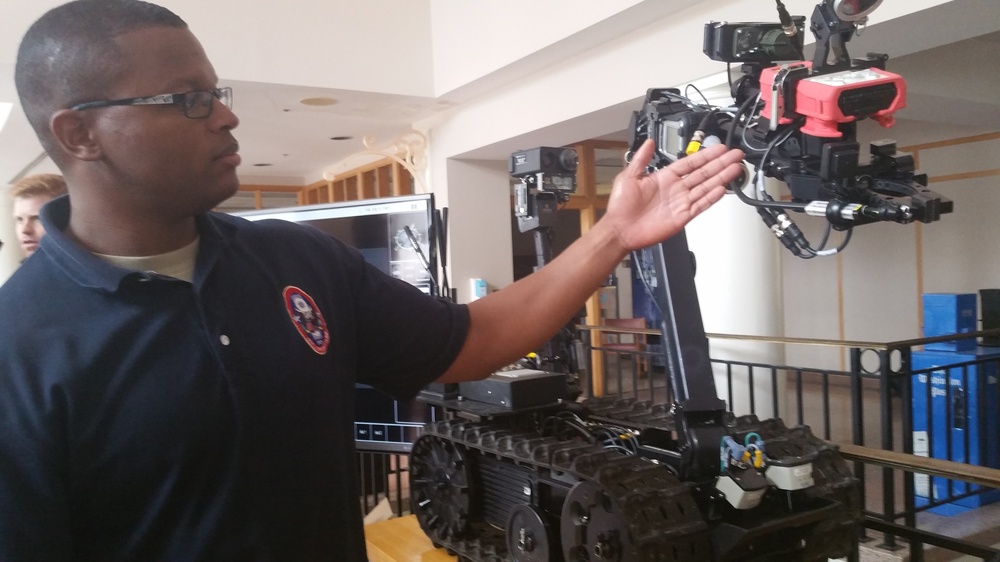
Nuclear radiation hazmat military training - DVIDS Public Domain


▶ CBRN-CADS Simulation V6
— Episode 04 Interactive Tactical Simulation

CBRN-CADS · EPISODE 4 OF 10
4

90 Seconds to Live

The CBRN Time Paradox
👤 ‘Biorobot’ Soldiers
📅 1986
📍 Chernobyl Reactor 4 Roof
🌡 22°C
🌬 1.8 m/s SW
⏱ ~12 min read

‘Biorobot’ Soldiers

Soviet Army, Chernobyl Liquidators · Chernobyl · Reactor 4 Roof

STEP 1 · CONFRONTING CBRN SITUATIONS

Chernobyl, Summer 1986

The robots broke. Remote-controlled machines sent to clear radioactive graphite debris from Reactor 4’s roof failed within minutes — their electronics fried by 12,000 roentgen/hour radiation. The Soviet military had no choice: send humans. They called them ‘Biorobots’ — biological robots. Each soldier was allowed exactly 90 seconds on the roof. 25 rem per run. One run per lifetime. Shovel the graphite. Run back. Next soldier. This rotation continued for months with 3,828 soldiers.

STEP 2 · CHARACTER ANALYSIS

‘Biorobot’ Soldiers

These were not volunteers in the traditional sense. They were conscripts and reservists, many told they would receive medals and housing benefits. Most were under 25. They wore lead vests that covered only their torsos. Their hands, faces, and legs were exposed. The 90-second timer was their only protection.

STEP 3 · IPB: CONTEXTUAL INTEGRATION

IPB: The Roof as the Most Dangerous Workplace on Earth

Radiation: 8,000-12,000 R/hr at roof center. Lethal dose in ~2 minutes. Physical hazard: Graphite blocks weighing 50+ kg, scattered across unstable roofing. Thermal: Core still generating decay heat. The only controllable variable: TIME. Every other factor was fixed. The 90-second rotation was not a safety measure — it was a survival calculation.

STEP 4 · ★ CBRN RESOLUTION INTELLIGENCE

★ When Time Itself Is the Enemy

The killer content: 90 seconds was not a safety margin. It was a death calculation. At 25 rem per 90 seconds, each soldier accumulated a lifetime maximum dose in a single run. 91 seconds meant measurably increased cancer risk. 120 seconds meant acute radiation syndrome. 180 seconds meant death within weeks.

BLIS-D eliminates this equation entirely. An unmanned drone has no biological time limit. No 90-second rotation. No 25-rem maximum. BLIS-D operates in contaminated zones indefinitely, with SDAV closed-loop control adjusting parameters continuously. The age of the biorobot is over.

RQ 93/100 · EXCEPTIONAL

STEP 5 · DECISION-MAKING

Decision: Time-Critical Operations Under Absolute Constraint

The decision architecture of Chernobyl’s roof was binary: you either complete the task within 90 seconds, or you absorb a lethal dose. There was no margin for error, no second chance, no Plan B. This is the purest form of time-critical operations — and it maps directly to Time-Critical CAS, where the window between request and impact determines survival.

STEP 6 · SITUATION RESOLUTION
Of the 3,828 Biorobots, many developed cancers and other radiation-related illnesses. The exact number of deaths attributable to roof duty remains disputed — Soviet records were incomplete and post-Soviet tracking inconsistent. What is certain: the human cost of operating in contaminated environments without robotic capability is measured in lives, not dollars.

D
DETECT

M
MAP

D
DECON

A
ASSESS

V
VERIFY

STEP 7 · CBRN-CADS SIMULATION SCENARIO
🎯

BLIS-D vs Biorobot: Time Exposure Simulator

INTERACTIVE

90초 카운트다운 시뮬레이터. 인간 Biorobot의 피폭량 증가 vs BLIS-D 드론의 무제한 작업을 비교합니다.
CAS ORIGINAL CBRN-CADS SELECT VARIABLE
Human Rotation BLIS-D Duration
Radiation Level Zone Intensity
Protection Shielding

▶ AI RECOMMENDATION

MODEBLIS-D: Unlimited operation time
CONFIDENCEABSOLUTE
DURATION∞ (no biological limit)
PARAMETERSSDAV auto-adjusting
ASSETSZero human exposure

이 블로그의 인기 게시물

CBRN-CADS EP.07 — AI vs the Chemical Officer: When Machines Make Better Decisions

CBRN-CADS EP.09 — Friendly Fire in the Fog of CBRN: When Decon Becomes Danger

CBRN-CADS EP.06 — Iron Dome → Decon Dome: The Shield That Falls From the Sky